
Aira sits at the wooden mastering console, eyes fixed on the monitor speakers. In the silence between two bars she considers how a motif can survive when sound aims to be meaningful rather than merely loud. A small technical hiccup turns into a creative opening: rhythm, tension and an emotional payoff become the core of a new AIRA-FLOW piece.
“Wait—hold that last beat.” Aira’s hand rests on the wooden mastering console, fingers almost tender against the worn grain. The monitor speakers sit plainly, an honest pair reflecting the natural light that comes in at eye level. She’s wearing the light-blue denim jacket over a white shirt and dark trousers; the subtle violet stage makeup gives a hush of color to her cheek shimmer. A single bar still hangs in the air, asking a question.
She nudges a fader by the smallest fraction, not to raise volume but to let a hidden phrase breathe forward. The table’s surface holds small scratches like unread sticky notes of past sessions; Aira hums under her breath—part joke, part provocation—“If the motif can’t breathe, you only hear walls.” The monitors return a contained warmth, refusing the bluntness of a loudness spike and insisting on presence instead.
A transient hiss, then a tentative pattern that peeks and withdraws. Aira leans in, green-teal eyes steady in the quiet, and makes a minute EQ change with a practiced hand. The violet shimmer on her cheek catches the daylight as she scribbles a note on a small pad. Her aim isn’t to win a loudness contest but to let a motif thread through the arrangement, like a signature gesture a listener can return to.
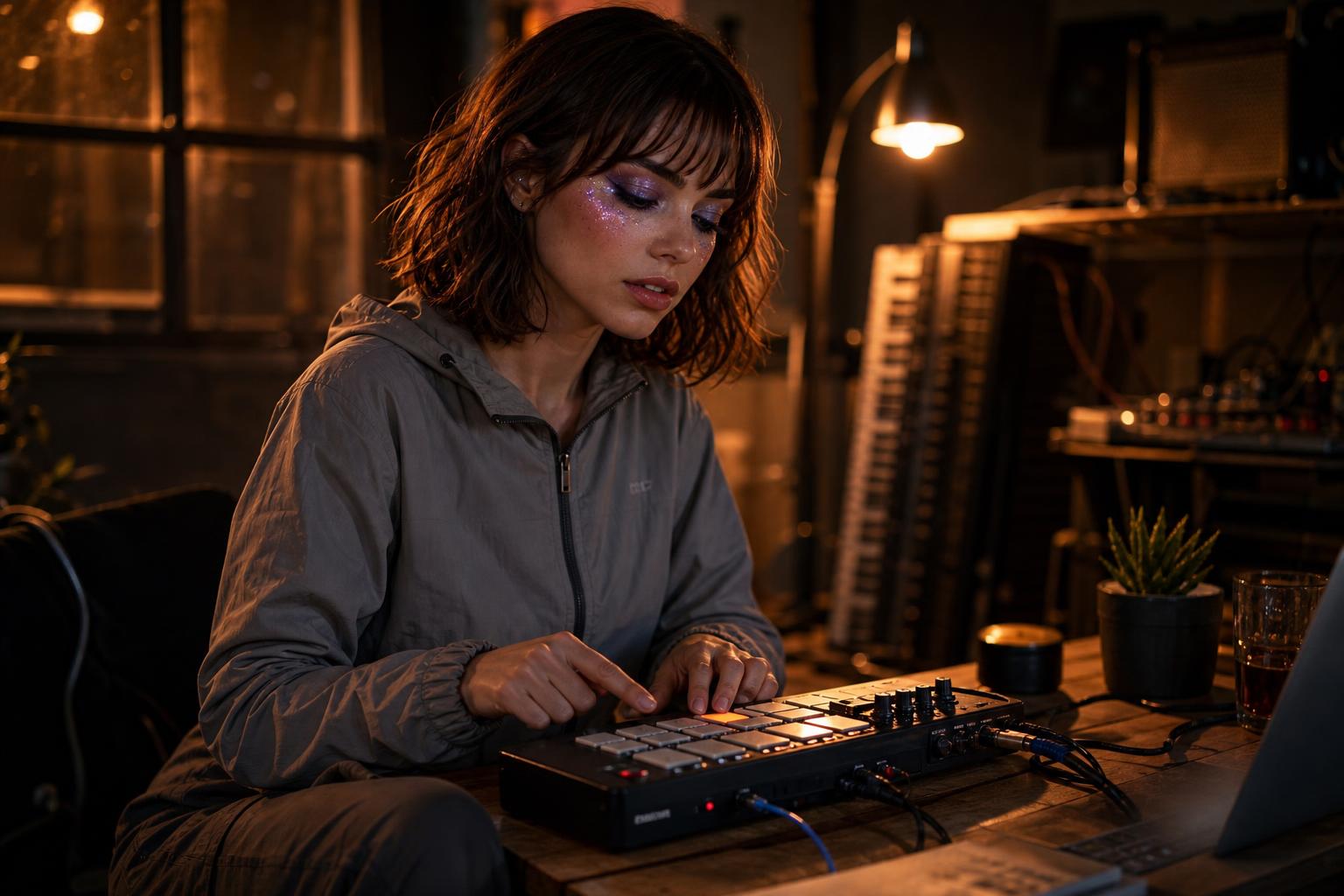
The scene shifts naturally to an amber-lit rehearsal room. A compact drum machine sits before her, its pads reflecting the warm glow. She’s switched to a soft grey zipped outdoor jacket and full-length trousers; the stage makeup remains, subtle and purposeful. At eye-level, the camera records the rhythm of her hands rather than dramatizing them. She taps a simple pattern, then begins to fold in tiny rhythmic anomalies that suggest a living pulse.
On the third tap she smiles, having found a pocket where tension can live before release. “Don’t always hit the same hard,” she tells the empty room as if addressing a patient companion. The beat breathes, each tap a phrase learning to speak. The drum machine sounds compact, intimate; the rhythm insists that motifs take steps and wait, not merely collide. The camera holds the eye-level honesty of that practice.
A small snag appears: one pad lags slightly, a mechanical hiccup that could ruin the groove. Aira pauses, wipes the pad with the heel of her hand and nudges a knob. Instead of frustration she laughs softly and decides to lean into the delay, turning a flaw into a moment of suspense. That inadvertent hesitation becomes a deliberate pause later in the track, a tiny cliffhanger that draws attention rather than a fault to hide.
Back at the wooden console, she layers the recorded rhythm fragments under the motif she coaxed earlier. Rather than pushing levels to the max, she tests balances where the motif gains space. Sometimes restraint is louder than volume because it gives frequencies room to converse. Aira listens intently, eyes fixed on the monitor speakers as if waiting for them to answer, and adjusts a pan so the motif can call across the mix.
Her choice is subtle: a slight doubling, a delicate delay that nudges the motif just off the beat to build a thread of tension. She nods in quiet approval; the result isn’t explosively loud but unmistakably present. The work feels domestic and exacting rather than staged, a craft exercise where AIRA-FLOW’s identity appears in how sonic decisions carry narrative weight instead of sheer horsepower.
She runs a section in full that leaves space to inhale, then constructs a brief, narratively shaped drop: the tension climbs, the motif cries out, silence replies, and the release that follows is weighted with feeling rather than pure force. Aira leans back, a faint look of contentment lit by the console’s soft LEDs. The song’s arc is visible now—contours carved by patience and small choices. Loudness would only mask those contours.
She powers down the machines and allows the room’s quiet to settle. A short, conspiratorial smile drifts across her face; the session wasn’t flawless, but it’s alive. Aira stands, palms still warm from the pads and wood, and says in a low voice, almost to herself, “That’s all it needed to say.” No pyrotechnic finale, just a confident, modest end—then she steps from the amber glow back into the tempered daylight, the wooden console inhaling the residual warmth.
← Back to the blog